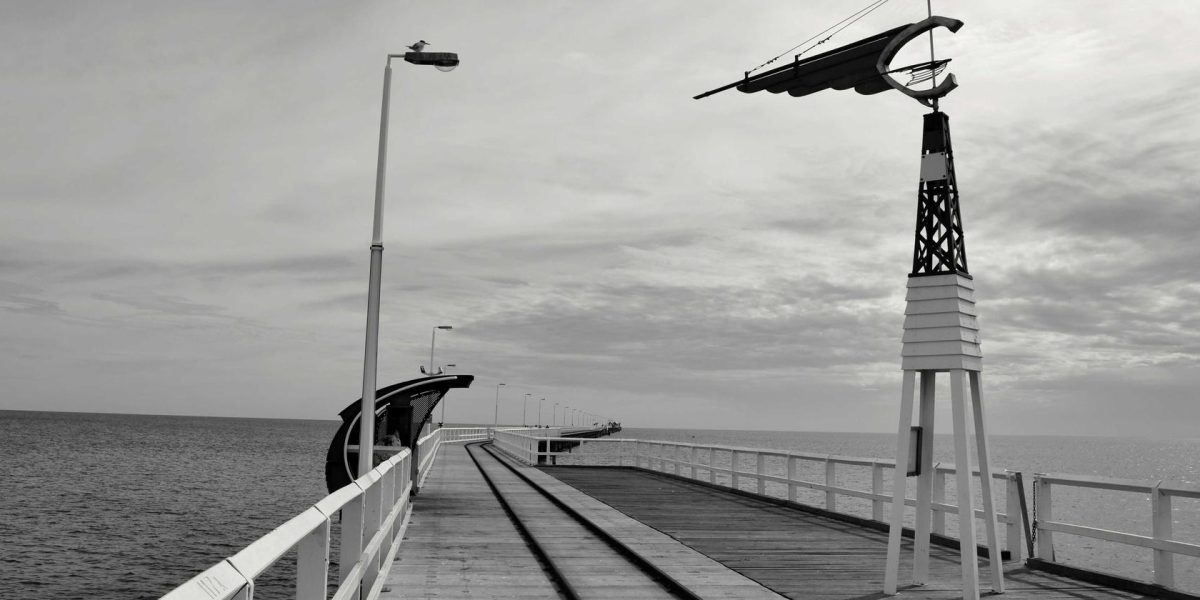
Every summer the same neighbourhoods lose power on the hottest days. We followed the cables back to the substations to find out why.
Numbers That Matter
Satellites pass overhead constantly, broadcasting weather images, telemetry and amateur radio traffic to anyone with the right antenna. Building a ground station used to require a roof, a budget and a licence application. Now it can be done on a balcony with a cheap software-defined radio, a homemade antenna and open-source decoding tools. Hobbyists share pass predictions in group chats and compare the crispest captures of storm systems. It is one of the few corners of technology where curiosity is rewarded directly, with pictures of the planet pulled out of thin air.
Heatwaves expose every shortcut taken during construction. Buildings without shade or cross-ventilation become ovens, rooftop equipment fails, and the people with the least money suffer first. Researchers mapping surface temperatures found differences of more than ten degrees between leafy streets and the concrete blocks a few hundred metres away. The fixes are not mysterious: trees, reflective roofs, shaded bus stops and cooling centres open late. What is missing is urgency. Each summer produces a round of reports and promises, and each autumn the attention drifts back to whatever feels more immediate.
Power is the quiet dependency underneath every other story we cover. The grid in this city was designed for a cooler climate and a smaller population, and every summer it reminds us of that fact. Transformers cook, substations trip, and entire blocks go dark just as air conditioners are needed most. The utility publishes cheerful statements about resilience, but the maintenance backlog tells a different story. Engineers we spoke to described replacing equipment older than they are, rationing spare parts between districts, and watching demand charts climb toward numbers the network was simply never built to carry.
- Peak demand has risen every year for a decade
- A third of transformers are past their design life
- Repairs wait months for parts
- Tree cover lowers local load noticeably
| Option | Cost | Range | Setup time |
|---|---|---|---|
| Salvaged router | Free | 200 m | 1 hour |
| Directional dish | 45 credits | 2 km | 3 hours |
| Sector antenna | 120 credits | 5 km | 1 day |
Open Questions
Cooling is the invisible cost of computation. Every calculation turns into heat, and that heat has to go somewhere. Large facilities pump it into towers that steam gently at dawn, while smaller operators crack windows and hope for a breeze. Engineers are experimenting with piping waste heat into nearby swimming pools and greenhouses, turning a liability into a neighbourhood amenity. The schemes work best when planners think about them early. Retrofitting a heat network into a finished district is expensive, but designing one alongside a new data centre is surprisingly cheap.
Corrections are part of the job, not an embarrassment to hide. When we get something wrong, we change the article, note what changed and explain why. Readers are remarkably forgiving of honest mistakes and remarkably unforgiving of silent edits. We also keep a public log of significant updates, because trust is built on the record rather than on promises. If you spot an error, tell us. Include a link, a quote or a document if you have one, and we will look at it within a day and let you know what we decided and why.
Photographers who work the night shift talk about light differently. They know which streets hold their colour after rain, which billboards cycle through the warmest tones and which platforms empty out between the last train and the first. The cameras have improved enough that grain is now a choice rather than a limitation, and many choose it anyway. The pictures in this series were made over several months, mostly between midnight and dawn, with small cameras that did not draw attention and a willingness to wait for the right person to walk into frame.
We are not waiting for permission anymore. We are waiting for parts.
Ada Brennan, mesh volunteer
We are not waiting for permission anymore.
Why It Matters
The people keeping the lights on rarely make headlines. They are the technicians who climb poles in the rain, the moderators who clear spam before breakfast, the volunteers who answer the same beginner question for the hundredth time with patience. Our coverage tries to keep them in view, because systems are only as reliable as the care that goes into them. If there is a thread running through everything we publish, it is this: technology is made by people, maintained by people and, when it fails, repaired by people too, usually late at night and without thanks.
Nobody planned the rooftop network. It grew the way ivy grows, one bracket and one borrowed extension cord at a time, until a map of the district looked less like a street grid and more like a nervous system. The early nodes were salvaged routers flashed with community firmware, zip-tied to water tanks and pointed at whichever neighbour had line of sight. Today the mesh carries school homework, pharmacy orders and late-night gossip, and it does so without a single invoice. The people who maintain it rarely call themselves engineers. They call themselves neighbours who got tired of waiting for someone else to fix things.
Ask anyone who has kept a piece of street hardware alive for a decade and you will hear the same complaint: the parts exist, the knowledge exists, but the manufacturer would rather you did not have either. Screws with proprietary heads, glued batteries and firmware that refuses to boot after a component swap are not accidents. They are business decisions. The repair crowd answers with printed guides, shared spare-part spreadsheets and a stubborn refusal to throw anything away. Their workshops smell of flux and instant noodles, and their shelves are lined with labelled bins of screens, ribbon cables and chips pulled from dead machines.
import csv
readings = [float(row[1]) for row in csv.reader(open('substation.csv'))]
print(max(readings), sum(readings) / len(readings))
What Comes Next
Security people like to say that the weakest link is always human, but that framing lets a lot of badly designed systems off the hook. When a login screen trains people to click through warnings, when a password policy guarantees sticky notes on monitors, the failure started in a design meeting long before anyone made a mistake at a keyboard. The best defenders we interviewed spend less time lecturing users and more time removing traps. They shorten the path to doing the right thing, they log everything that matters, and they assume that anything exposed to the network will be probed within hours.
The night markets run on trust that would make an auditor faint. Vendors lend each other power cables, split the cost of a shared generator and settle debts with a handshake and a promise to cover the next shift. Payment happens on cracked phones, in cash, and occasionally in favours that are hard to price. Tourists see the neon and the steam and the noise. Regulars see a finely tuned economy where everyone knows who sells the best dumplings, who can unlock a phone in ten minutes, and who should never be asked about where the stock came from.
Surveillance rarely arrives as one big decision. It accumulates. A camera goes up after a burglary, a licence plate reader follows a grant application, a transit card starts logging trips because the data might be useful someday. Each step sounds reasonable in isolation, and by the time anyone draws the whole picture the infrastructure is already paid for and wired in. That is why the most effective campaigns we have seen start with a map. When residents can see every lens pointed at their front door, the conversation shifts from abstract privacy rights to something personal and immediate.
Where It Started
Open-source tools changed the economics of making things. A decade ago, a small studio needed expensive licences before it could render a single frame or edit a single minute of footage. Now a determined team with donated hardware can produce work that stands next to studio releases. The catch is labour. Free software is free to download, not free to maintain, and the communities behind it depend on volunteers who juggle bug reports with rent. The healthiest projects we know treat documentation as seriously as code, pay contributors when they can, and say thank you often.
There is a particular kind of silence in a data centre at three in the morning. The fans never stop, so it is not quiet exactly, but the humans are gone and the machines carry on without supervision. Operators describe the night shift as long stretches of boredom punctuated by moments of pure adrenaline. A disk array degrades, a cooling unit throws an alarm, a routing change on another continent sends traffic somewhere it should not go. The job is to notice early, act calmly and write down everything, because the morning team will want to know exactly what happened.

How long did the whole build take you?
The part about the maintenance backlog is the scariest thing I have read all week.
Beautiful photos. The rain shots in particular.
Same experience here, especially in the older buildings.